
Mold Removal Tips
Mold Inspection vs. Mold Testing: What’s the Difference?
Published 2026-09-22 · By Ryan Thompson, Noblesville Mold Removal
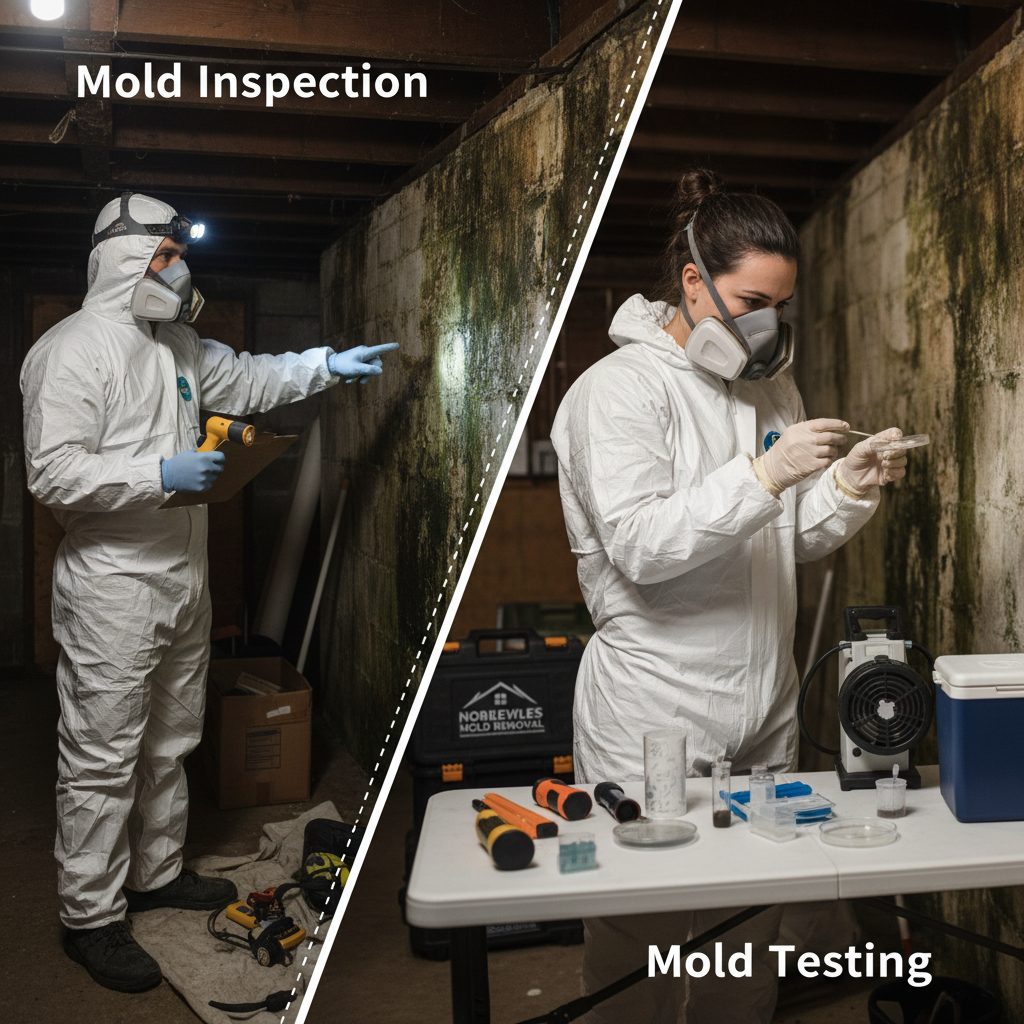
In the humid continental climate of Noblesville, IN, understanding the nuances of mold management is crucial for maintaining a healthy indoor environment. If you're confronted with potential mold issues in historic homes or modern constructions alike—particularly in suburbs like Fishers or Carmel—it's essential to differentiate between mold inspection and mold testing.
Many homeowners in neighborhoods such as Downtown Noblesville or North 9th Street may wonder why both procedures are necessary. Understanding this difference is vital for effective mold remediation, especially given Hamilton County’s average of 44 inches of annual precipitation, which can foster conditions ideal for mold growth.
What is Mold Inspection?
A mold inspection primarily involves a thorough visual assessment of your property by a trained professional, like myself, Ryan Thompson, a licensed and insured mold remediation expert. This process includes: 1. Inspecting common problem areas, such as basements, bathrooms, and attics. 2. Looking for visible signs of mold or moisture, especially given the water intrusion risks from plumbing leaks, which are common in older structures. 3. Evaluating areas with known moisture problems, like around Forest Park or near the White River, where flooding can occur during intense storms. 4. Collecting preliminary data to understand the extent of potential mold issues. Unlike testing, inspections do not quantify mold levels in the air or surfaces. They simply address visible issues and assess the conditions that promote mold growth. If an inspection indicates that a significant moisture problem exists, that’s when we might recommend moving to the next step—mold testing.
What is Mold Testing?
In contrast, mold testing refers to the scientific analysis of mold spores in your environment. If you live near Morse Reservoir or Potter's Covered Bridge, where humidity levels can impact indoor air quality, this service becomes invaluable. Mold testing typically involves: - Air sampling to determine if mold spores are present in the indoor environment. - Surface sampling from suspected moldy areas to identify the type of mold present. - Laboratory analysis of samples for quantitative and qualitative results. While inspections provide insights into visible mold, testing reveals the species and concentration of mold, critical for addressing specific health concerns. This level of detail ensures remediation strategies are tailored precisely, whether you’re dealing with black mold removal or a more benign mold strain.
Choosing Between Inspection and Testing
Deciding whether to conduct an inspection or testing can depend on several factors unique to your home in Noblesville: - Visible Mold: If you see mold, an inspection is typically the first step. - Health Concerns: If occupants have health issues, testing may provide peace of mind regarding indoor air quality. - Home History: Properties in places like Historic Noblesville that have had prior water issues should consider testing as a regular part of maintenance. - Insurance Requirements: In some cases, your insurance company might require testing documentation before covering mold remediation expenses.
Regardless of your situation, it’s important to work with professionals who are familiar with the local environment. As a resident of Hamilton County with extensive experience dealing with the unique climate conditions and structures in Noblesville, I can guide you efficiently through the process to ensure that your home is safe and healthy.